Can a Bow and Arrow Kill You?
By James Holbert · Explained Archery
Yes, any hunting-weight bow or crossbow is lethal to a human at normal shooting ranges. A 40-pound recurve or a modern compound generates tens of foot-pounds of kinetic energy, enough to penetrate deeply, and a broadhead-tipped arrow causes severe bleeding through cutting rather than just impact. This is exactly why range rules, backstops, and safe handling exist, not because archery is unusually dangerous when those rules are followed.
Quick answer
A bow and arrow can kill a human, and this is not a hypothetical. Hunting bows are designed specifically to kill deer, elk, and other large game cleanly at typical hunting ranges, and the human body is not more resistant to a broadhead than a deer's is. What determines whether a hit is fatal is kinetic energy, penetration, and where the arrow strikes, the same factors that determine a clean or poor shot on game.
The equipment matters, but so does behavior. Almost every serious archery accident traces back to a person downrange, a missing backstop, a dry fire, or careless handling, not a freak equipment failure. The rest of this guide covers the numbers and the safety habits that keep archery one of the safer shooting sports when people follow them.
Why is a bow and arrow lethal?
Three factors combine to make an arrow dangerous: kinetic energy, momentum, and the shape of the point.
- Kinetic energy is what drives penetration. A hunting arrow typically carries 25 to 90-plus foot-pounds of kinetic energy depending on bow weight and arrow mass, which is well above the 25 foot-pounds generally considered the minimum for an ethical hit on deer-sized game, and far more than a human body resists.
- Momentum keeps the arrow driving forward through tissue rather than stopping at the surface, which is why a heavier, slower arrow can penetrate as deep as or deeper than a light, fast one.
- The point decides the wound. A broadhead is built to cut, opening a wide wound channel that causes rapid blood loss. A field point punctures rather than cuts, but at hunting-bow energy levels it still penetrates deeply enough to cause fatal internal injury.
See the Wikipedia entry on kinetic energy for the physics behind why speed matters more than mass, pound for pound, in a projectile.
None of this depends on the target being an animal. Human skin, muscle, and bone offer resistance in the same physical sense that game animal tissue does, and a broadhead does not distinguish between the two. This is the basis for treating every bow and every crossbow, including youth and low-poundage models, as a weapon capable of serious harm, not a toy.
How much kinetic energy does a bow or crossbow produce?
| Typical setup | Approximate arrow speed | Approximate kinetic energy |
|---|---|---|
| 25 lb youth recurve | ~150 fps | ~15 ft-lb |
| 40 lb recurve | ~180 fps | ~29 ft-lb |
| 60 lb compound | ~280 fps | ~73 ft-lb |
| 70 lb compound | ~295 fps | ~87 ft-lb |
| 400 fps crossbow | ~400 fps | ~142 ft-lb |
These are typical estimates for common arrow weights at each setup, not guaranteed numbers for any specific bow. Even the lightest youth setup in this table carries enough energy to put an arrow deep into a person. A 15 ft-lb arrow is far less likely to kill than a 70 ft-lb one, but a sharp point in the neck, chest or eye can still cause a fatal injury, so every bow on this table is treated as lethal on the range. Run your own setup through the arrow kinetic energy calculator to see where it falls.
How far away can a bow and arrow still hurt someone?
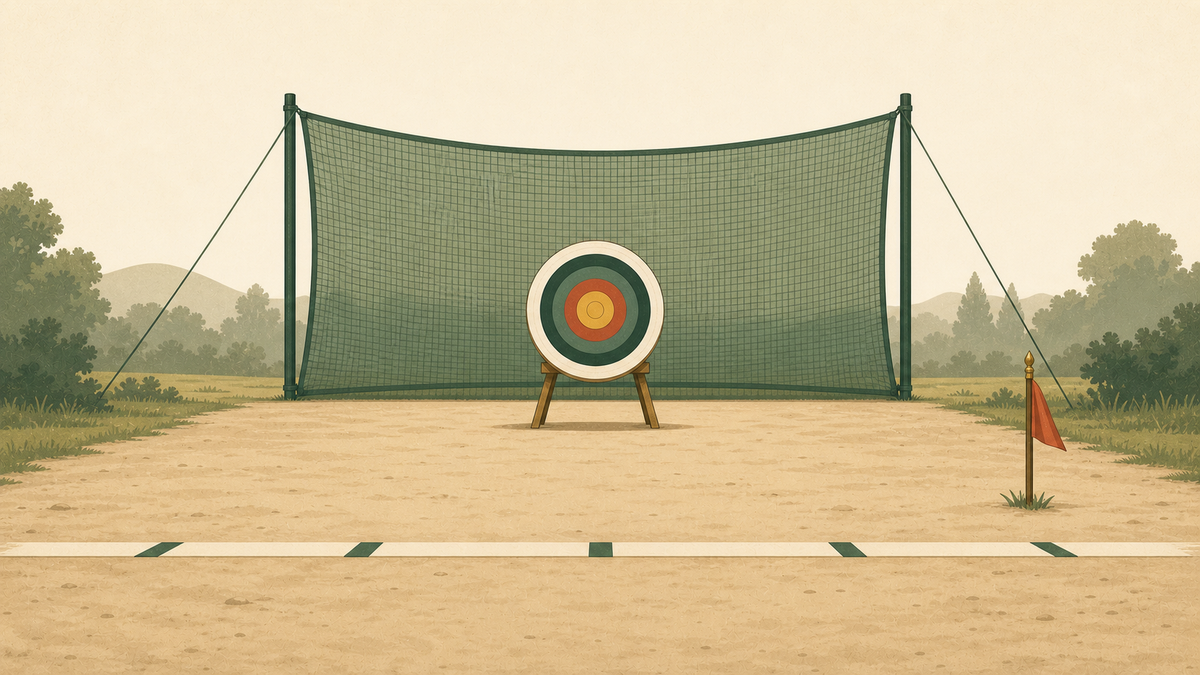
Much farther than the distance you are aiming at. A lofted shot, arced upward instead of flat, can travel several hundred yards before it loses enough energy to become harmless, which is exactly why range rules require a backstop and a clear zone beyond the target, not just behind it.
Effective range, the distance where you can place a shot accurately and consistently, is usually well inside 40 to 60 yards for a bow and 60 to 100-plus yards for many crossbows. Maximum range, the farthest an arrow can physically travel, is much longer and is the number that matters for safety planning behind a range. See how far will a crossbow shoot for crossbow-specific numbers, and the archery target distance chart for how shooting distances are typically set up on a range.
This gap between effective range and maximum range is why range design matters as much as shooter skill. A club range with a berm rated for the bows it hosts, or a backyard setup with a real backstop and enough clear distance behind it, accounts for a miss or a pass-through, not just a well-placed shot.
What causes most archery accidents?
Equipment failure is rare. Most accidents trace back to a handful of preventable causes.
| Cause | Why it happens |
|---|---|
| Someone downrange | A person walks in front of the shooting line before an archer has released or during a group session with poor line control. |
| No real backstop | A missed or pass-through shot travels past the target into an uncontrolled area, such as a yard, field, or street. |
| Dry fire failures | Releasing a drawn bow with no arrow sends full limb energy into the equipment, which can shatter limbs and send fragments toward the shooter. See dry firing a compound bow. |
| Cracked carbon arrows | A carbon arrow with a hidden crack can splinter on release, driving sharp fragments into the shooter's bow hand or arm. |
| Drawing while walking or moving | Movement with a drawn bow removes control over where the arrow points if you stumble or are bumped. |
| Fingers above a crossbow rail | A hand or fingers resting above the rail can be struck by the string or cables on release. |
Nearly all of these are handling errors, not equipment defects, which is why training and range discipline prevent most injuries.
Basic safety checklist for every session
- Confirm a solid backstop and a clear area beyond and around the target before the first shot.
- Never draw or shoot toward a person, animal, road, or building, even as a joke or to show someone your bow.
- Inspect every arrow for cracks, especially carbon shafts, before each shot.
- Never release a drawn bow without an arrow on the string.
- Keep hands and fingers clear of a crossbow rail and string path at all times.
- Wait until the range or shooting area is fully clear before anyone shoots.
The backyard archery safety guide covers how to apply these rules at home.
Is archery a dangerous sport?
Compared with many contact and team sports, archery has a low injury rate when range rules and supervision are in place. Organizations like USA Archery and school programs run through the National Archery in the Schools Program build their safety orientation specifically around line control, equipment checks, and clear shooting commands, and both report low rates of serious injury under those conditions. The danger in archery comes almost entirely from skipping those controls, not from the sport itself.
First aid basics if an arrow injury happens
This is general information, not a substitute for professional medical care. If someone is struck by an arrow or bolt:
- Do not remove an embedded arrow. Removing it can cause more bleeding and tissue damage than leaving it in place until trained help arrives.
- Control bleeding around the wound with direct pressure using clean cloth, without disturbing the shaft itself.
- Call emergency services immediately and keep the person as still and calm as possible until help arrives.
Related guides
These guides cover the situations where archery safety questions come up most.
Frequently asked questions
Short, direct answers to common questions about bow and arrow lethality and safety.
Can a bow and arrow kill a human?
Yes. Any hunting-weight bow, generally 40 pounds or more, produces enough kinetic energy to cause fatal injury at normal ranges, and the same is true of modern crossbows.
Can a bow and arrow kill you from far away?
A lofted arrow can travel several hundred yards and still carry enough energy to injure someone, which is why range backstops need to account for distance well beyond the target, not just the shooting line.
How much kinetic energy does it take to kill a person?
There is no single threshold, but hunting bows that generate 25 to 90-plus foot-pounds of kinetic energy, the range considered adequate for deer-sized game, are also capable of fatal injury to a person.
Is a compound bow more dangerous than a recurve bow?
A compound bow at a comparable draw weight usually produces higher arrow speed and kinetic energy than a recurve, but both are lethal at typical hunting and target draw weights.
What causes most bow and arrow accidents?
People being downrange, missing or inadequate backstops, dry fires, cracked carbon arrows, and drawing a bow while moving are the most common causes, not equipment defects.
Is archery a dangerous sport?
Injury rates are low compared with many contact sports when range rules, supervision, and equipment checks are followed, which is the basis of safety programs run by USA Archery and NASP.
References
These sources support the guidance on this page.