Beginner Archery Guide
This guide contains affiliate links. As an Amazon Associate I earn from qualifying purchases. How affiliate links work.
By James Holbert · Explained Archery
Beginner route
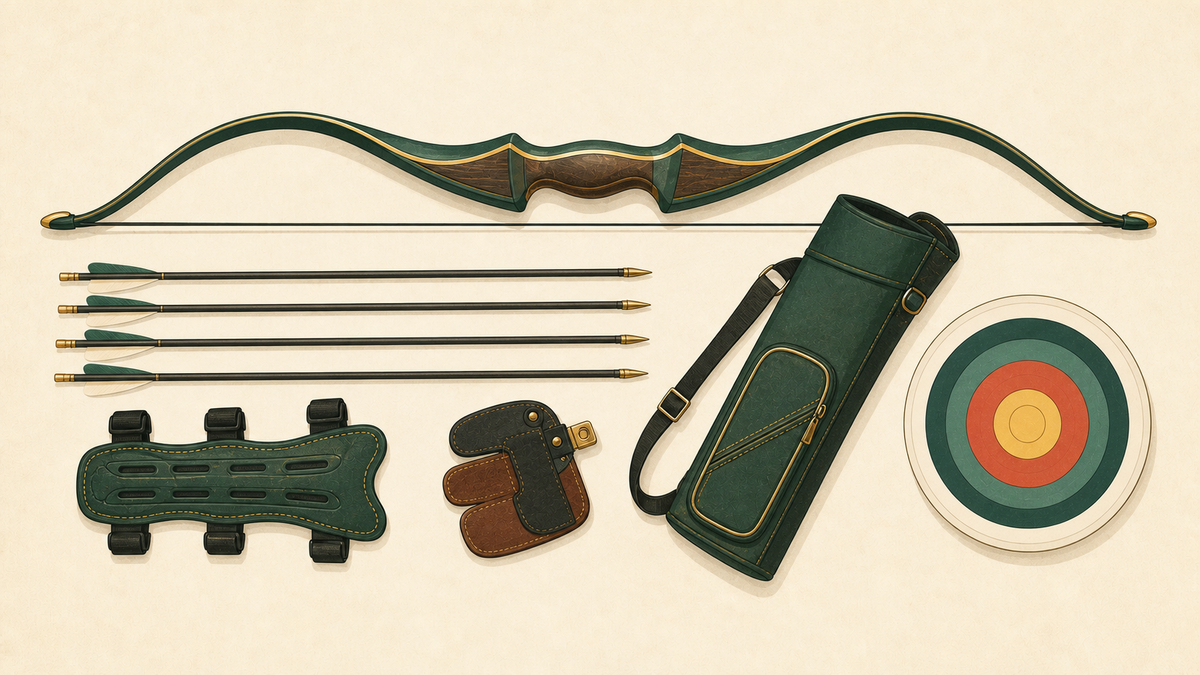
Quick answer: start with safety, a manageable bow, matched arrows, a proper target and backstop, and repeatable form. Do not buy every accessory first. Fit, safety, and practice habits matter more than expensive gear.
A beginner can make fast progress with simple equipment if the setup fits and the first sessions stay close and controlled.
| Step | Start with | Why it matters |
|---|---|---|
| Safety | Safe direction, target/backstop, range rules, no dry fire | Prevents avoidable damage and unsafe shots |
| Bow | Recurve, compound, or longbow that fits the archer | Too much draw weight makes learning harder |
| Arrows | Length and spine matched to the setup | Wrong arrows can fly poorly or be unsafe |
| Protection | Arm guard, finger tab/glove or release aid | Keeps the shot more comfortable and controlled |
| Carry / storage | Quiver, case, bow stringer for recurve/traditional bows | Helps protect the setup between sessions |
| Form | Grip, anchor, release, follow-through | Good habits matter more than accessories |
Step 1: Learn basic archery safety
Always shoot toward a safe target and backstop. Keep the shooting line clear, inspect arrows before use, and never dry fire a bow. Follow the range rules where you shoot. If you are practicing at home, read Backyard Archery Safety first. If you want a dry-fire caution page, read Dry Firing a Compound Bow.
Step 2: Choose a beginner-friendly bow type
Recurve, compound, and longbow setups all work, but they do not ask for the same accessories. The best choice depends on goals, budget, practice place, and maintenance comfort. Compare Compound vs Recurve Bow and Recurve vs Longbow before you buy or borrow a bow.
Step 3: Get draw length and draw weight close
Draw length affects fit and repeatability. Draw weight affects comfort and form. Start with a manageable setup and confirm the fit with the measurement guides before you try to tune anything else. After you choose arrows, compare finished arrow mass and front balance with the Arrow Weight Calculator and Arrow FOC Calculator before you buy a full batch.
Step 4: Choose arrows that match the setup
Arrow length and spine should match the bow and the archer’s draw. Check the shafts for damage before each session. Arrows that do not fit the bow can make practice harder and less safe.
Step 5: Learn basic form
Keep the stance steady, the grip relaxed, the anchor repeatable, and the release smooth. Good form tells you more than a pile of accessories ever will.
Step 6: Learn how to aim
Once the stance, grip, and anchor are repeatable, aim becomes easier to understand. Read How to Aim a Bow for the beginner aiming basics.
Step 7: Practice at the right distance
Start close and focus on tight groups, not distance. Increase distance only when the shot is safe and consistent. If the setup is still being sorted out, compare it with Archery Target Distance Chart and Backyard Archery Safety. If arrows keep missing left or right, check Why Do My Arrows Go Left or Right? before chasing the sight or changing the setup too quickly. Once the arrows are chosen, the Arrow Weight Calculator and Arrow FOC Calculator can help you compare mass and balance.
Common beginner equipment mistakes
- Too much draw weight.
- Practicing too far too soon.
- Gripping too tightly.
- Skipping arrow fit.
- Buying accessories before learning form.
- Ignoring safe target and storage habits.
Simple first-month plan
- First session: safety, close-range form, and calm handling.
- First week: repeatable grip, anchor, and target/backstop discipline.
- First month: consistent short-range groups, draw-weight comfort, and arrow checks.
Skill builds steadily. The goal is clean repetition, not fast results.
Related beginner guides
Buying guides: Best Beginner Recurve Bow and Best Archery Target and Backstop.
See also: How Long Does It Take to Learn Archery?, How to String a Recurve Bow, Is It Legal to Shoot a Bow in Your Backyard?, How to Choose Arrows for a Recurve Bow, Compound Bow Maintenance and Cleaning, Best Arrows for Beginners.
Frequently asked questions
Short answers for the most common beginner questions.
What does a beginner need to start archery?
A safe bow setup, matched arrows, a target and backstop, and basic protection gear are enough to start.
Is archery hard to learn?
It is easier when the setup fits and the first sessions stay close and controlled. Good habits matter more than buying more gear.
Should beginners start with recurve or compound?
Either can work. Choose the bow that fits the archer, the budget, and the practice setting.
What draw weight should a beginner use?
Use a weight that stays smooth and repeatable. Lower is better than too heavy.
How far should beginners shoot?
Start close enough to watch the group and the form. Add distance only after the shot is controlled.
How often should beginners practice archery?
Short, steady practice works better than long, tiring sessions. Keep the early sessions focused and repeatable.
Can I learn archery without a coach?
Yes, but a club, shop, or experienced archer can help spot fit and form issues faster.
References
- USA Archery
- Lancaster Archery Supply — How to Choose Your First Bow
- World Archery: disciplines and how the sport is organised
- NASP: archery safety orientation