How Long Does It Take to Learn Archery?
This guide contains affiliate links. As an Amazon Associate I earn from qualifying purchases. How affiliate links work.
By James Holbert · Explained Archery
Most beginners fire a safe, basic shot in their first one to three sessions. Consistent groups at 18 meters usually take two to six months of weekly practice. Club-competitive shooting takes one to three years, and national or Olympic-level archery typically takes eight to ten years or more of coaching and 15 to 30 hours a week on the line.
Quick answer
- Basic safe form: 1 to 3 sessions covers safe handling, a proper stance, and a first controlled shot into a backstop.
- Consistent groups at 18 m: 2 to 6 months of weekly practice, once anchor point and release settle down.
- Club-competitive: 1 to 3 years of regular shooting, usually with some coaching and scoring rounds.
- National or Olympic level: 8 to 10 years or more, with structured coaching and 15 to 30 hours a week of training.
How long does it take to learn archery depends on what "learn" means to you. Learning to shoot safely is fast. Learning to shoot well is a longer, steady process built on reps, not talent.
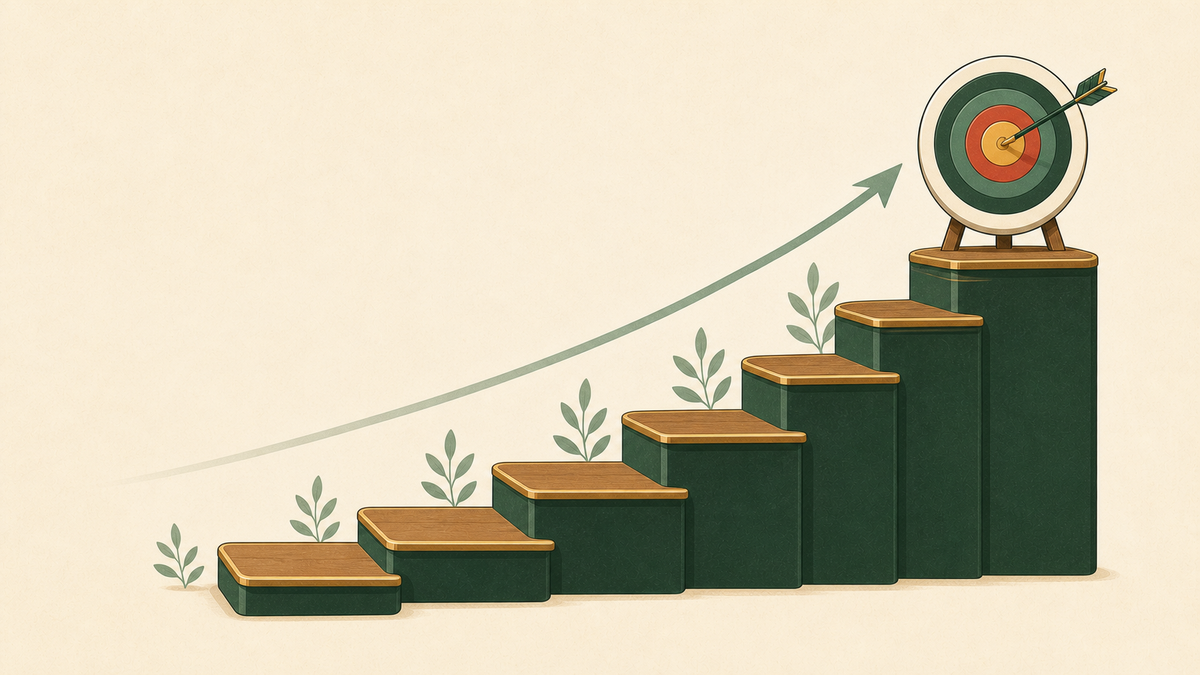
Archery milestone timeline
These are typical ranges for an adult beginner shooting a recurve or compound bow with reasonable form guidance. Individual progress varies with practice frequency, coaching, and equipment fit.
| Stage | What you can expect | Typical practice volume |
|---|---|---|
| Session 1 | Safe handling, a fitted bow, and a first controlled shot at close range into a proper backstop | One 60 to 90 minute session |
| Week 4 | Repeatable stance, grip, and draw; arrows land on the target most of the time at 10 to 15 m | 2 to 3 sessions a week, 30 to 45 minutes each |
| Month 3 | A settled anchor point and release; groups start to tighten at 18 m instead of scattering across the face | 2 to 3 sessions a week |
| Month 6 | Consistent groups at 18 m, some comfort at 30 m, first scoring rounds | 2 to 4 sessions a week |
| Year 1 | Ready for club shooting, indoor leagues, and local scoring rounds; equipment fit becomes a limiting factor if ignored | 3 to 5 sessions a week |
| Year 3 | Club-competitive; consistent scores across standard distances, some archers reach state-level ranking events | 4 to 6 sessions a week, some with a coach |
| Years 5 to 10 | National ranking, team trials, or Olympic pathway for a small number of archers who train full time | 15 to 30 hours a week with structured coaching |
These ranges assume regular practice. Sporadic practice pushes every stage back, sometimes by years.
How long does it take to get good at archery?
Most people reach a level they would call "good" -- tight, repeatable groups at 18 m and confident shooting out to 30 m -- somewhere between six months and two years. That range is wide because "good" means different things to different archers. If your goal is to hit a paper plate-sized group at 18 m, two to six months of weekly practice usually gets you there. If your goal is to shoot a full indoor round with a competitive score, plan on a year or more.
The biggest single driver of speed is practice frequency. An archer who shoots three short sessions a week improves faster than one who shoots a single long session, because form breaks down under fatigue and the brain needs repeated, fresh reps to build a repeatable shot. Working through the fundamentals in a beginner archery guide before you start speeds this up, since you spend less time unlearning bad habits.
What changes the timeline
Coaching
A coach or experienced club member who can spot a collapsing anchor point or an inconsistent archery anchor point from across the range saves months of trial and error. Self-taught archers often plateau because they cannot see their own form flaws.
Bow type
A compound bow is faster to hit consistently with because the let-off and sights do much of the aiming work for you, so early scores look better sooner. A recurve bow takes longer to shoot well because you hold the full draw weight at anchor and rely more on back tension and a repeatable release. See compound vs recurve bow for how the two disciplines diverge in practice time.
Draw weight
Too much draw weight slows everything down. If you are straining to hold or draw the bow, your form collapses shot after shot and bad habits set in fast. Start light and check your setup against a bow draw weight chart before you commit to a heavier bow.
Practice frequency versus session length
Three 30-minute sessions a week beat one 2-hour session most weeks. Short, frequent practice keeps your shots fresh and lets your body log more distinct repetitions before fatigue changes your form.
Equipment fit
A bow with the wrong draw length or draw weight fights you on every shot. Confirm your numbers with a draw length calculator and correct them early, since poor fit is one of the most common reasons progress stalls.
A weekly beginner practice plan
This plan fits around a normal week and builds toward consistent 18 m groups within two to three months.
| Day | Minutes | Focus |
|---|---|---|
| Monday | 30 | Stance, grip, and draw at close range (5 to 10 m) |
| Tuesday | Rest | No shooting; let form-related muscles recover |
| Wednesday | 30 | Anchor point consistency and release at 10 to 15 m |
| Thursday | Rest | Optional light stretching or dry-form practice without an arrow |
| Friday | 40 | Grouping practice at 18 m, tracking arrow placement |
| Saturday | 45 | Aiming and sight picture at 18 to 30 m using how to aim a bow fundamentals |
| Sunday | Rest | Review the week and note recurring form errors |
Add distance gradually. Jumping from 10 m to 30 m before your group tightens usually makes form worse, not better; check current expectations against an archery target distance chart.
How long does it take to master archery?
Mastery is not a single milestone; it is a long plateau of small refinements. Most archers who reach a genuinely expert level -- shooting tight, repeatable scores under pressure, at multiple distances, in wind -- have put in five to ten years of consistent practice, often with ongoing coaching the whole way. Even experienced archers keep adjusting form, equipment, and mental routine, because the margin for error shrinks as scores climb.
Unlike the early stages, mastery-level progress is not steady. Archers often shoot the same scores for months, then jump forward after fixing one specific flaw, such as grip tension or a rushed release. Treat a long practice history as normal, not a sign that something is wrong.
What does it take to become a professional archer?
Very few archers shoot full time for a living. Most competitive archers hold other jobs and treat tournaments as a serious hobby or a part-time pursuit; the small number who go full time typically earn income from a mix of sponsorships, prize money at ranking tournaments, and coaching or clinic work rather than tournament winnings alone.
In the United States, the common pathway runs through USA Archery: club-level shooting and local leagues, then state ranking events, then national ranking tournaments and the national team trials that feed World Archery's international competitions and the Olympic team selection process. Reaching national trials usually means years of structured training, often 15 to 30 hours a week, plus travel to ranking events and consistent access to a qualified coach.
Outside the Olympic recurve pathway, disciplines such as compound, field archery, and 3D archery run their own competitive circuits through bodies like the NFAA, with different equipment rules and scoring but a similar climb: local competition first, then regional and national ranking, then a small pool of sponsored or semi-professional shooters at the top.
How to measure your progress
Group size at a fixed distance is the clearest, most honest progress metric because it removes guesswork.
| Distance | Beginner group size | Solid intermediate group size |
|---|---|---|
| 10 m | Fist-sized to paper-plate-sized | Two to three inches across |
| 18 m | Paper-plate-sized to loosely scattered on the face | Three to five inches across |
| 30 m | Scattered across most of the target face | Six to eight inches across |
Track scoring rounds too, not just group size. A standard indoor or outdoor round gives you a repeatable number to compare week to week.
Plateaus and how to break them
Every archer plateaus. Scores flatten for weeks even with regular practice, usually because one small form element has quietly gone wrong and repetition is reinforcing it rather than fixing it. Common causes include a creeping anchor point, a punched release instead of a relaxed one, grip tension that changes shot to shot, or draw weight that has become too much as fatigue builds late in a session.
To break a plateau, slow down rather than shoot more. Drop back to a closer distance, shoot fewer arrows with full attention on one form element at a time, and video your shot from the side to compare it against earlier footage. Cross-check your list of habits against common archery form mistakes, since plateaus are often one overlooked error rather than a general lack of skill.
Mistakes that stall progress
- Shooting with too much draw weight before form is solid
- Moving to longer distances before groups tighten at closer range
- Gripping the bow tightly instead of letting it sit relaxed in the hand, as covered in how to hold a bow
- Skipping rest days and practicing through fatigue, which reinforces bad form
- Changing equipment to fix a problem that is actually a form issue
- Never getting a second set of eyes on your shot, even once
Fix one habit at a time. Trying to correct everything at once usually slows progress rather than speeding it up.
Related guides
These guides cover the fundamentals that shape how fast you progress.
Frequently asked questions
Common questions about archery learning timelines.
How long does it take to learn archery?
Basic safe handling and a first controlled shot can be learned in one to three sessions. Consistent, repeatable form at 18 m usually takes two to six months of weekly practice.
How long does it take to get good at archery?
Most beginners reach tight, repeatable groups at 18 m within two to six months of weekly practice, and confident scoring rounds within a year.
How long does it take to master archery?
Mastery generally takes five to ten years of consistent practice and ongoing coaching, since even experienced archers keep refining form and mental routine.
How long does it take to become a professional archer?
Reaching national or Olympic-level competition typically takes eight to ten years or more, with structured coaching and 15 to 30 hours a week of training through club, state, and national ranking events.
Can you learn archery in one day?
You can learn safe handling and shoot a controlled first arrow in one day, but consistent form and tight groups take weeks to months of repeated practice.
Is a compound or recurve bow faster to learn?
A compound bow is generally faster to hit consistently with because let-off and sights simplify aiming. A recurve bow takes longer to shoot well since it relies more on back tension and a repeatable release.
How often should beginners practice archery?
Two to four short sessions a week beat one long session, since fresh, frequent reps build repeatable form faster than practicing through fatigue.
Why has my archery progress stalled?
Plateaus are usually caused by one small form error, such as a creeping anchor point or excess draw weight, being reinforced through repetition. Slow down, isolate one element, and check your setup rather than adding more volume.
References
These sources support the guidance on this page.