How to Level a Bow Sight
This guide contains affiliate links. As an Amazon Associate I earn from qualifying purchases. How affiliate links work.
By James Holbert · Explained Archery
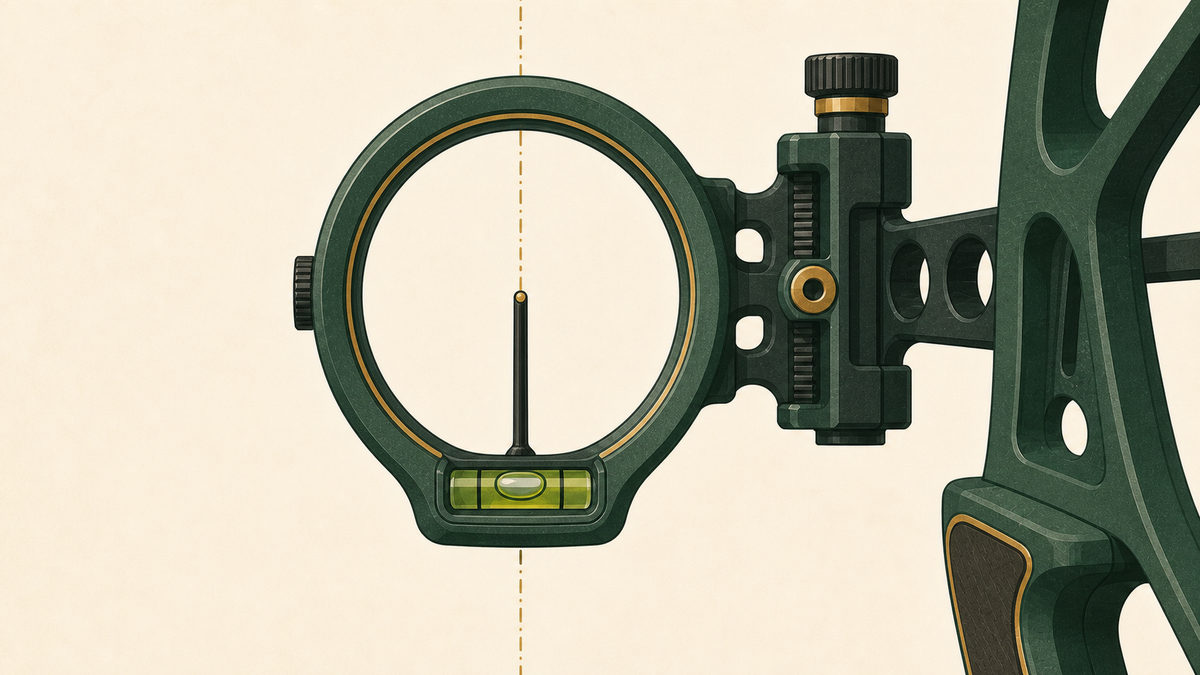
Leveling a bow sight means aligning the sight with the bow so the bubble level gives useful feedback. Get the first and second axis right for basic setup, then worry about the third axis if you shoot steep uphill or downhill angles. After that, sight the bow in at the range.
Quick answer
A leveled bow sight helps you hold the bow consistently. It does not fix bad form, wrong draw length, or a poor tune. Start with a stable setup, level the sight to the bow, confirm the bubble, and then sight the bow in with real shots.
What sight leveling does
Sight leveling helps reduce canting errors. If the bow is tilted, the bubble can mislead you and the arrows can drift left or right. That said, leveling the sight will not fix a wrong anchor, a loose grip, or a draw length that does not fit. If you need to confirm bow fit first, use How to Measure Draw Length or the Draw Length Calculator.
First, second, and third axis
- First axis: the sight bar or horizontal alignment.
- Second axis: whether the bubble reads level when the bow is vertical.
- Third axis: how the sight behaves when you aim uphill or downhill.
For most basic setups, first and second axis are the main checks. Third axis matters more if you hunt or shoot steep angles.
What you need
- A bow vise or another stable setup
- A small level or sight-leveling tool
- Allen keys
- A safe work area
- A target or range for the final sight-in
- An optional plumb line
Step-by-step: basic bow sight leveling
- Put the bow in a stable position.
- Check that the bow itself is vertical.
- Check the sight housing and bubble.
- Adjust the sight according to the manufacturer’s design.
- Recheck after tightening the screws.
- Confirm the setup at the range.
Checking second axis
With the bow vertical, the bubble should read level. If it does not, adjust the sight’s second-axis setting if your sight has one. Some basic sights have limited adjustment, so check the manual before forcing anything. If the bubble still looks wrong after a careful setup, a shop can help.
Checking third axis
Third-axis adjustment matters more for steep uphill or downhill shots. If you mostly shoot flat ground, you can treat it as a later refinement instead of an emergency fix. If you hunt or shoot mountain angles, a pro shop can set it up more confidently than a guess can.
Common mistakes
- Leveling the sight while the bow is not vertical
- Ignoring loose screws
- Confusing sight leveling with sighting in
- Changing anchor or grip during testing
- Not rechecking after tightening
- Assuming the bubble fixes form problems
After leveling: sight in the bow
Leveling is setup; sighting in confirms point of impact. Use a safe target and backstop. Start close, confirm the group, and then move farther out only when the setup is behaving the way you expect.
If you are doing a full setup check, the Bows hub and Archery Tools page keep the other setup guides close by.
Safety note: damaged bows
If the bow has been hit, dropped, or dry fired, stop before you level the sight or sight it in. Read Dry Firing a Compound Bow and inspect the bow first.
Related setup links
Use these pages when you want the setup path to stay practical.
Frequently asked questions
Short answers for common sight-leveling questions.
Do I need to level my bow sight?
Yes, if you want the bubble to give useful feedback and help reduce canting errors.
What is second-axis leveling?
It is the adjustment that makes the bubble read level when the bow itself is vertical.
What is third-axis leveling?
It is the adjustment that keeps the sight honest on steep uphill and downhill shots.
Is leveling a bow sight the same as sighting in?
No. Leveling is setup. Sighting in confirms where the arrows actually hit.
Can I level a bow sight at home?
Yes, if you have a stable setup and the right tools. A shop can still help if the sight is difficult to adjust.
Why does my bow sight bubble look wrong?
The bow may not be vertical, the sight may need adjustment, or the screws may not be tight enough.
Should a bow shop level my sight?
If you are unsure, if the sight has complex axis adjustments, or if you shoot steep angles, a bow shop is a practical choice.
References
These references support the sight leveling and setup guidance used here.
- Archery360: Why Sight Leveling is Important and How it’s Done
- Archery360: How to Adjust Your Bow Sight
- Hoyt: Pre-Season / Mid-Season Bow Inspection