Compound Bow Size Chart
This guide contains affiliate links. As an Amazon Associate I earn from qualifying purchases. How affiliate links work.
By James Holbert · Explained Archery
Compound fitting guide
Compound bow fit starts with draw length and a draw weight you can control. Axle-to-axle length, brace height, let-off, and intended use change how the bow feels. Height alone is not enough to size a compound bow, and the bow still has to stay inside the manufacturer’s draw-length range.
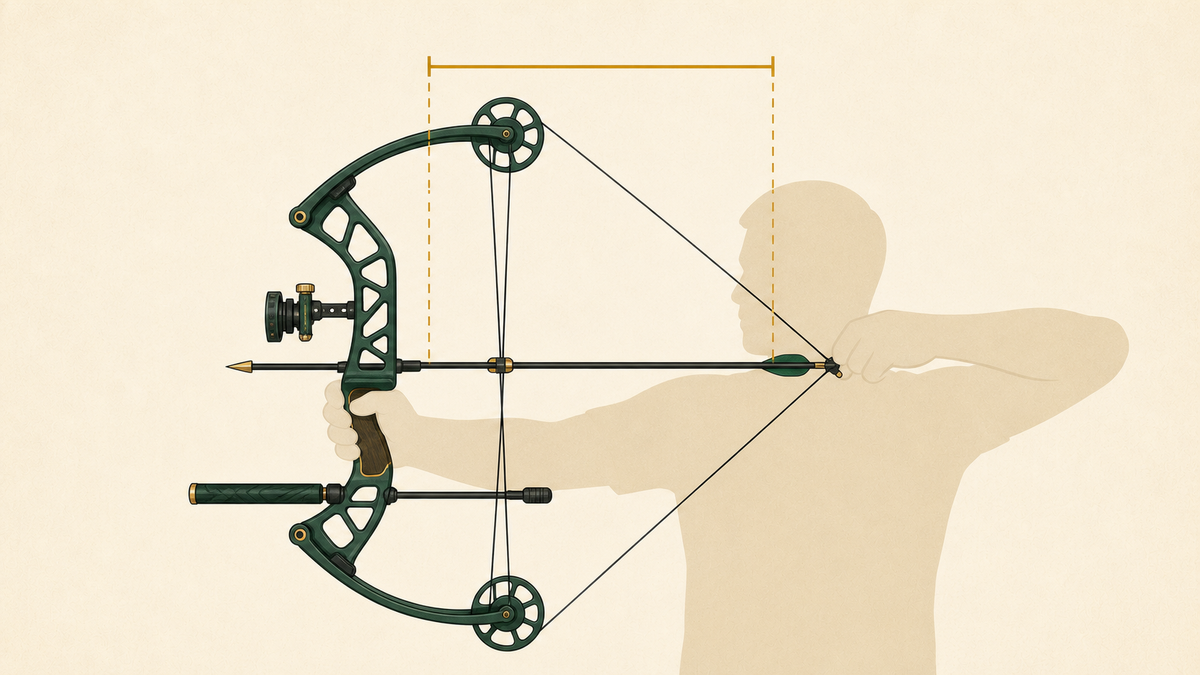
Quick answer
Compound bow fit starts with draw length and manageable draw weight. Axle-to-axle length, brace height, let-off, and intended use also affect feel. Height alone is not enough to size a compound bow, and module or cam settings matter because the bow has to stay inside the maker’s draw-length range.
If you are choosing a first compound, treat this chart as a starting point, not a final prescription. Use the number from the draw-length guide, then compare the bow’s adjustment range before you buy or set it up.
How to use this chart
Use the draw-length guide and calculator first. Then check the chart below against the bow in hand.
Compound bow fit checklist
- Draw length fits the archer.
- Draw weight is controllable.
- Bow has the correct cam or module range.
- Peep and sight align naturally.
- Grip and anchor feel repeatable.
- Axle-to-axle length fits the use case.
- Brace height is forgiving enough for the archer.
- Bow can be inspected and set safely.
This checklist is a starting point. Always check the bow manufacturer’s specifications and avoid drawing a bow that feels unsafe or damaged.
Compound bow setup factor chart
General compound bow setup factors
| Setup factor | What it usually means | Beginner note |
|---|---|---|
| Draw length | Must fit the archer and stay inside the bow’s adjustment range. | Check the range and cam or module settings before you buy. |
| Draw weight | Should stay controllable through the shot. | Use the draw-weight chart as a starting point, then confirm with the actual bow. |
| Axle-to-axle under 30 in | Compact and common for hunting-style setups. | Can feel less forgiving for some beginners. |
| Axle-to-axle 30–34 in | Common all-around compound length. | A practical middle ground for many archers. |
| Axle-to-axle 34+ in | Often steadier and easier to hold at full draw. | Useful for target-style setups, but larger to carry. |
| Brace height shorter | Can feel faster and less forgiving. | Not the easiest place to start if form is still changing. |
| Brace height longer | Often feels more forgiving. | Not a guarantee of accuracy, but it can help some beginners. |
| Let-off | Reduces holding weight after the peak draw. | Helpful for holding, but peak draw weight still matters. |
These are general fitting notes, not fixed rules. Compound bow models vary widely.
Draw length is the first fit number
Too-long draw length can push the bow arm out too far, force the archer to lean, and make anchor control harder. Too-short draw length can feel cramped and shorten the shot. On compound bows, draw length is often adjusted by modules or cams, so the fit has to stay inside the maker’s range.
Use the draw-length guide and the draw-length calculator before you decide a compound is the wrong size. If you are shopping a bow, check the model’s published draw-length range instead of guessing from height alone.
Draw weight and let-off
Peak draw weight is not the same as holding weight. Let-off lowers the holding weight at full draw, but it does not make a bow safe if the peak weight is too much for the archer. A bow that is too heavy still hurts form and can make shooting unsafe.
Use the bow draw weight chart and How to Measure Bow Draw Weight before you settle on a setup. If the bow shakes, the archer collapses at release, or the shoulders feel strained, the draw weight is too high.
Axle-to-axle length
Shorter compound bows are compact and easier to carry. Longer bows often feel steadier at full draw, especially for some target archers. Intended use matters more than a single number, so do not treat one axle-to-axle length as best for everyone.
For a beginner, the question is usually whether the bow feels stable, fits the space, and stays comfortable through the full shot cycle.
Brace height
Brace height can change forgiveness and feel. Very short brace-height bows can be less forgiving for some beginners, while longer brace-height bows often feel calmer. It is only one part of the setup, so do not use brace height alone to judge accuracy.
Compound bow fit for beginners
Start with adjustability and control. Avoid buying more draw weight than you can hold and move through cleanly. Choose a bow that can be set to the archer’s actual draw length, then check the arrow setup after the bow is right.
Common sizing mistakes
- Choosing by height alone.
- Ignoring the draw-length range.
- Buying too much draw weight.
- Confusing holding weight with peak draw weight.
- Ignoring module or cam requirements.
- Buying used without checking adjustability.
- Assuming a hunting-style setup is best for every beginner.
When to ask a bow shop
- Changing modules or cams.
- Checking draw length.
- Setting the peep or sight.
- Inspecting a used bow.
- Fitting a youth archer by measured reach and control, not age alone.
- Setting a high draw weight.
- Checking a bow that looks damaged or unsafe.
When the adjustment path is unclear, ask the shop before you force the bow or buy the wrong setup.
Related setup guides
Use these pages to keep the compound setup path together.
Frequently asked questions
Short answers for common compound fit questions.
What size compound bow do I need?
Start with draw length and manageable draw weight. Then compare axle-to-axle length, brace height, and the bow’s draw-length range.
Can I size a compound bow by height?
No. Height can help estimate draw length, but it does not size the bow by itself.
What compound bow draw length do I need?
Use the draw-length guide and calculator first, then check the bow’s published range and module or cam settings.
What axle-to-axle length is best for beginners?
There is no single best number. A common all-around range is a practical starting point, but fit and use case matter more than one size.
Is a longer compound bow more accurate?
Not by itself. Longer bows can feel steadier for some archers, but accuracy still depends on fit, form, and setup.
Is let-off the same as draw weight?
No. Let-off lowers the holding weight after the bow reaches peak weight. It does not replace proper draw-weight selection.
Should beginners buy a used compound bow?
Only if the bow is inspected, adjustable, and fits the archer. Check cams, modules, strings, cables, and the draw-length range before buying.
References
These references support the compound sizing notes on this page.