How to Remove Fletching Glue From Carbon Arrows
This guide contains affiliate links. As an Amazon Associate I earn from qualifying purchases. How affiliate links work.
By James Holbert · Explained Archery
Remove fletching glue from carbon arrows carefully. Use the lightest method that gets the job done, keep heat and solvents under control, and stop if the shaft starts looking scuffed or soft. If the shaft is questionable, retire it instead of forcing the cleanup.
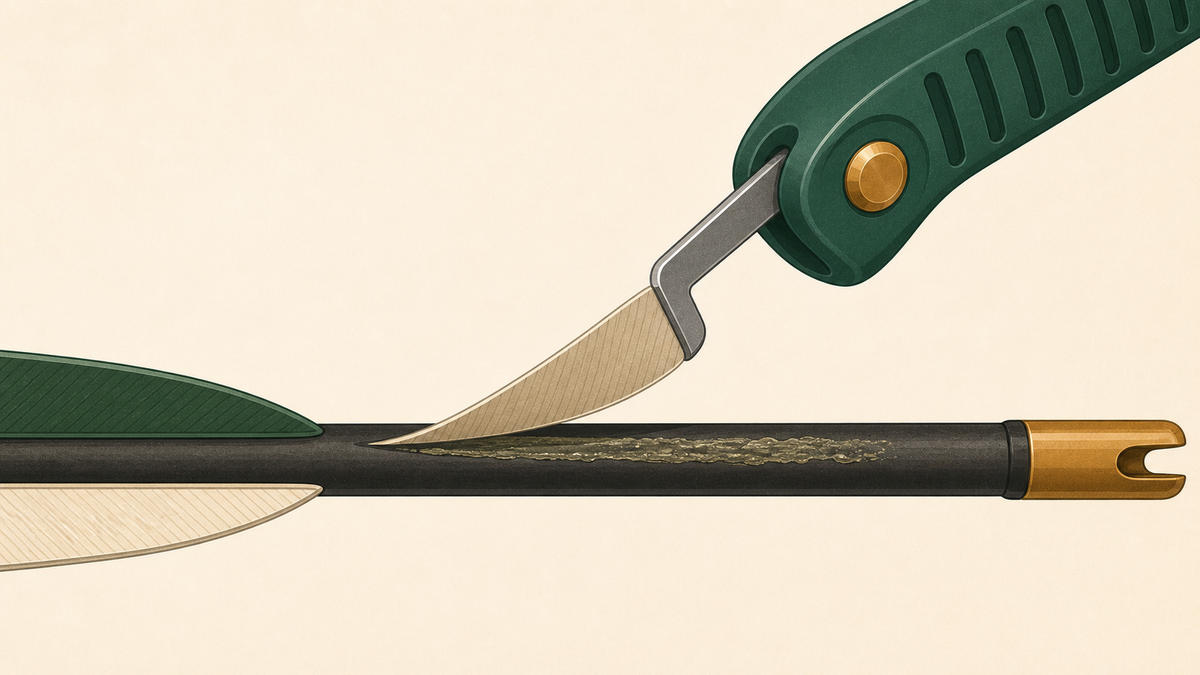
Quick answer
The safe approach is to remove the vanes or feathers without digging into the carbon, then clean the glue residue with the shaft maker’s recommended method. Do not soak the shaft in random solvents, and do not scrape hard enough to damage the fibers.
What you need
- A clean work surface
- A small knife or vane remover used carefully
- Paper towels or clean rags
- Isopropyl alcohol or the shaft maker’s approved cleaner
- Light hand pressure and patience
Step-by-step: removing fletching and glue
- Secure the arrow so it cannot roll.
- Start at the vane edge and lift only as much as needed to release the fletching.
- Peel or cut the vane free without gouging the shaft.
- Wipe the residue away in small passes instead of trying to strip the whole shaft at once.
- Clean the fletching area until the surface is free of loose adhesive and dust.
- Let the shaft dry fully before re-fletching.
Common mistakes
- Soaking carbon shafts in the wrong solvent
- Scraping too deep with a knife
- Pulling hard enough to peel carbon fibers
- Leaving glue ridges under a new vane
- Skipping the final wipe and dry time
- Ignoring a shaft that already shows surface damage
Safety notes
Keep your fingers clear of the blade. Work slowly around the nock and point end. If the shaft already has cracks, deep gouges, or a soft spot, do not try to save it by forcing the cleanup. For a new build, confirm the shaft length first with How to Determine Arrow Length or the Arrow Length Calculator.
When to stop
If the glue is not moving, the shaft is heat-sensitive, or the carbon is starting to fuzz, stop and switch to a safer method or a new shaft. It is cheaper to replace one shaft than to rebuild an entire set of arrows around a damaged one.
Related arrow guides
These pages keep the rest of the arrow setup path in one place.
Frequently asked questions
Short answers for the most common fletching-removal questions.
Can I soak carbon arrows in solvent to remove glue?
No. Use the shaft maker’s guidance and avoid soaking carbon in random solvents.
Can I use heat to remove fletching glue?
Only with caution and only if the method is safe for the shaft and adhesive. Too much heat can damage carbon.
Should I use a knife to scrape the glue off?
Only lightly and only enough to release the residue. Cutting too deep can score the shaft.
Do I need to clean the shaft before re-fletching?
Yes. A clean, dry shaft helps the next adhesive bond properly.
How do I know if the shaft is ruined?
If the carbon fibers are frayed, gouged, or soft-looking, retire the shaft instead of reusing it.
Should I confirm arrow length before re-fletching?
Yes. Make sure the shaft length still matches the bow setup before you spend time rebuilding it.
References
These references support the cleaning and re-fletching guidance used here.