Why Do My Arrows Go Left or Right?
By James Holbert · Explained Archery
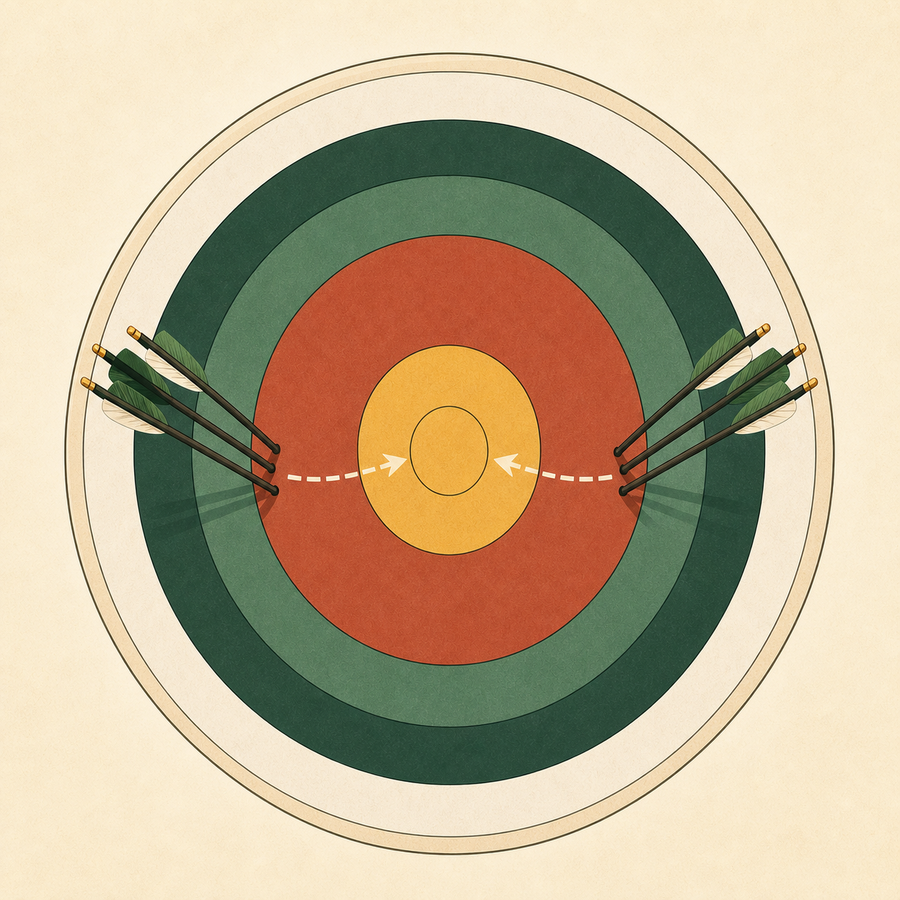
Arrows often go left or right because of grip torque, an inconsistent anchor point, poor release, wrong draw length, sight alignment, or arrow spine and setup issues. Beginners should check form first before moving the sight or buying new arrows. Fix one variable at a time, and shoot only toward a safe target and backstop.
Quick answer
Arrows often go left or right because of grip torque, inconsistent anchor point, poor release, wrong draw length, sight alignment, or arrow spine and setup issues. Check form first before moving the sight or changing arrows. Fix one variable at a time, and keep the target lane safe.
Safety before troubleshooting
- Use a safe target and backstop.
- Start close enough to group arrows safely.
- Inspect arrows before shooting.
- Do not shoot damaged arrows.
- Do not dry fire.
- Stop if the bow feels damaged, painful, or unsafe.
If the bow has been damaged or dry fired, read Dry Firing a Compound Bow before you keep using it.
First check: are you grouping or scattering?
Tight groups that land left or right often point to a consistent form or sight issue. Scattered arrows usually point to form inconsistency first. Beginners should focus on group size before distance so the pattern is easier to read.
Cause 1: gripping the bow too tightly
A tight grip twists the bow. That torque can push arrows left or right, even if the rest of the shot feels normal. Keep the bow hand relaxed and compare your grip with How to Hold a Bow.
Cause 2: inconsistent anchor point
Different anchor positions change alignment. If the face or string reference changes from shot to shot, the arrows can move around with it. Keep the anchor repeatable and compare it with Archery Anchor Point.
Cause 3: draw length or draw weight does not fit
A draw length that is too long can force leaning or a forced anchor. A draw length that is too short can feel cramped. Too much draw weight can cause shaking and collapsing. Use How to Measure Draw Length, the Draw Length Calculator, and How to Measure Bow Draw Weight to check the fit.
Cause 4: release or follow-through problem
Plucking the string, punching the trigger, collapsing, or dropping the bow arm can move arrows left or right. Keep this beginner-level and compare the pattern with Archery Form Mistakes. If you are shooting too far back, compare it with Archery Target Distance Chart before you keep changing the sight.
Cause 5: sight or aiming setup
If the groups are tight but consistently left or right, sight adjustment may matter. Leveling and sight-in are setup steps, but they should come after the main form checks. Use How to Level a Bow Sight for the setup side of the process, not as a shortcut around form problems.
Cause 6: arrow spine, arrow length, or arrow setup
Mismatched arrows can affect flight and group location. Arrow length, point weight, and spine interact, so there is not one universal fix for every bow. Check How to Determine Arrow Length, Arrow Spine Chart, and the arrow setup notes on Arrows. If you are changing point weight or front balance, compare the setup with the Arrow Weight Calculator and Arrow FOC Calculator before changing more variables.
Recurve vs compound notes
Recurve and finger release setups can show left/right problems from release, anchor, and spine. Compound and release-aid setups can show issues from grip torque, peep alignment, sight setup, and tune. Left-handed and right-handed setups also change what “left” means, so avoid universal fix-it rules.
Simple troubleshooting order
| Order | Check |
|---|---|
| 1 | Move closer |
| 2 | Check safe target and arrow condition |
| 3 | Check grip |
| 4 | Check anchor |
| 5 | Check draw length and draw weight |
| 6 | Check release and follow-through |
| 7 | Check sight only if groups are consistent |
| 8 | Check arrow spine and setup |
Work from form to setup, and change one variable at a time.
When to get help
If arrows miss the target area, you feel pain or strain, the bow feels too heavy, arrows or bow parts are damaged, or the groups stay far left or right after the basic checks, stop and get help. A local club, coach, or bow shop can check the full shot and setup.
Related beginner and arrow guides
Use these pages to keep the beginner troubleshooting path in one place.
Frequently asked questions
Short answers for common left/right arrow questions.
Why do my arrows go left or right?
Grip torque, anchor changes, draw length, release problems, sight setup, and arrow spine can all move arrows left or right.
Should I move the sight first?
No. Check the form basics first, then adjust the sight only if the groups are tight and consistent.
Can draw length affect left or right misses?
Yes. An incorrect draw length can change anchor, body alignment, and how the shot leaves the bow.
Can bad grip affect accuracy?
Yes. A tight grip can twist the bow and push arrows left or right.
Do recurve and compound bows miss left and right for the same reasons?
Some causes overlap, but the diagnosis is not identical. Recurve, compound, left-handed, right-handed, finger release, release aid, and sight setup all change the pattern.
How do I know if the problem is arrow spine?
If the arrows remain inconsistent after form checks, and the arrow length, point weight, or spine does not match the bow setup, a spine chart or shop check can help.
What should I check first?
Start close, check the target and arrow condition, then look at grip, anchor, draw fit, release, and only after that the sight and arrow setup.
References
These references support the safety, form, and arrow-setup guidance on this page.