Archery Equipment List
This guide contains affiliate links. As an Amazon Associate I earn from qualifying purchases. How affiliate links work.
By James Holbert · Explained Archery
Beginner checklist
Quick answer: start with a safe bow setup, matched arrows, a proper target and backstop, and a few protection items. Buy the rest only after the setup fits and the first shots are stable.
Fit and safety matter more than expensive extras. A beginner does not need every accessory on day one.
| Gear | Start with | Why it matters |
|---|---|---|
| Bow | Recurve, compound, or longbow that fits | Too much draw weight makes learning harder |
| Arrows | Length and spine matched to the bow | Wrong arrows can fly poorly or be unsafe |
| Target and backstop | Proper archery target with a safe stop behind it | Protects people, gear, and property |
| Arm guard | Useful on most beginner setups | Helps prevent string slap |
| Finger tab or glove | Common for recurve and traditional bows | Protects fingers on the string |
| Release aid | Common on compound setups | Supports a clean release if the bow is built for it |
| Quiver | Simple carry option | Keeps arrows organized and easy to reach |
| Bow stringer | For recurve and many traditional bows | Makes stringing and unstringing safer |
| Bow case or storage | Basic protection between sessions | Helps prevent damage and dirt buildup |
| Basic maintenance items | Wax, small repair supplies, and safe storage habits | Keeps the setup ready for the next session |
| Optional accessories | Sight, stabilizer, plunger, or similar extras | Useful later, not required at the start |
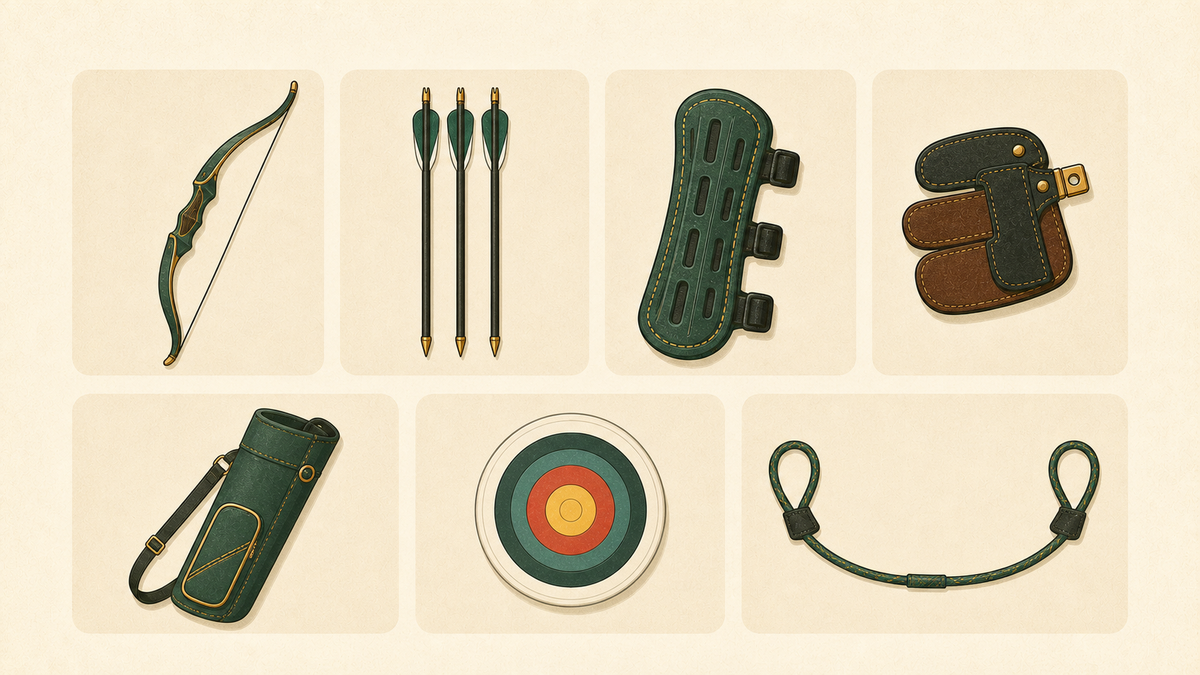
Bow
Recurve, compound, and longbow setups all work, but they do not ask for the same accessories. Choose a bow you can draw smoothly and repeatably before you buy extras. A lighter, manageable setup helps more than a powerful bow that feels hard to control.
Arrows
Arrows need to match the bow setup, not just the archer’s height. Check arrow length and spine together, and inspect shafts, nocks, points, and fletching before you shoot again. After you have a starting length, compare finished arrow mass with the Arrow Weight Calculator and front balance with the Arrow FOC Calculator before you buy a full batch.
Target and backstop
A safe target setup matters as much as the bow itself. Use a proper archery target and a backstop that can stop arrows cleanly. Do not shoot toward open space, traffic, hard surfaces, or anything you cannot control. If you are planning at-home practice, compare the target setup with Backyard Archery Safety.
- Use a target built for your arrow speed.
- Keep the backstop behind the target face.
- Follow the range rules where you shoot.
- Stop if the target or backstop looks worn out.
Safety and protection gear
Most beginners should plan on an arm guard and some hand protection. A finger tab or glove works well on many recurve and traditional setups. A release aid is common on a compound bow if the bow is built for that style of shooting. Store the bow safely between sessions so strings, limbs, and accessories do not get damaged.
Gear beginners can wait to buy
- Expensive stabilizers.
- Advanced sights before form is stable.
- Specialized tuning tools that will sit unused.
- Broadheads before the bow is ready for them and the rules allow them.
- Multiple accessories before the basic setup feels right.
| Recurve | Compound |
|---|---|
| Bow stringer, finger tab or glove, simple storage, and often fewer accessories | Release aid, sight, peep, and more setup-specific parts |
| Usually easier to understand on day one | Often needs more setup help from a shop or experienced archer |
| Good for learning clean form feedback | Good for let-off, aiming aids, and a more technical setup |
Common beginner equipment mistakes
- Buying too much draw weight.
- Buying arrows before checking length and spine.
- Skipping the target or backstop.
- Buying accessories before learning form.
- Copying someone else’s setup without checking fit.
- Ignoring safe bow storage between sessions.
Buying guides: Best Beginner Recurve Bow and Best Archery Target and Backstop.
See also: How Many Arrows Are in a Quiver?, How to String a Recurve Bow, Arrow Spine Calculator, How to Choose Arrows for a Recurve Bow, Compound Bow Maintenance and Cleaning, Best Crossbow for Beginners, Best Arrows for Beginners, Best Bow Stringer.
Frequently asked questions
Short answers for the most common beginner equipment questions.
What equipment do I need to start archery?
A safe bow setup, matched arrows, a target and backstop, and a few protection items are enough to start.
Do beginners need a recurve or compound bow?
Either can work if the bow fits, the draw weight is manageable, and the setup matches the archer’s goals.
How many arrows should beginners buy?
Enough to practice without constant breaks. A small set is fine, but all arrows should match the same setup.
Do I need an arm guard for archery?
Many beginners do, especially when learning recurve or traditional form and string path.
Do I need a bow sight as a beginner?
No. A sight can help on some setups, but it is not the first thing a beginner needs.
What archery gear can wait?
Advanced sights, stabilizers, tuning tools, and broadheads can wait until the basic setup and form are stable.
What is the most important beginner archery equipment?
A bow that fits, arrows that match, and a safe target setup matter more than any accessory.
References
- USA Archery
- USA Archery: Club Resources
- Lancaster Archery Supply — How to Choose Your First Bow