Archery Form Mistakes
This guide contains affiliate links. As an Amazon Associate I earn from qualifying purchases. How affiliate links work.
By James Holbert · Explained Archery
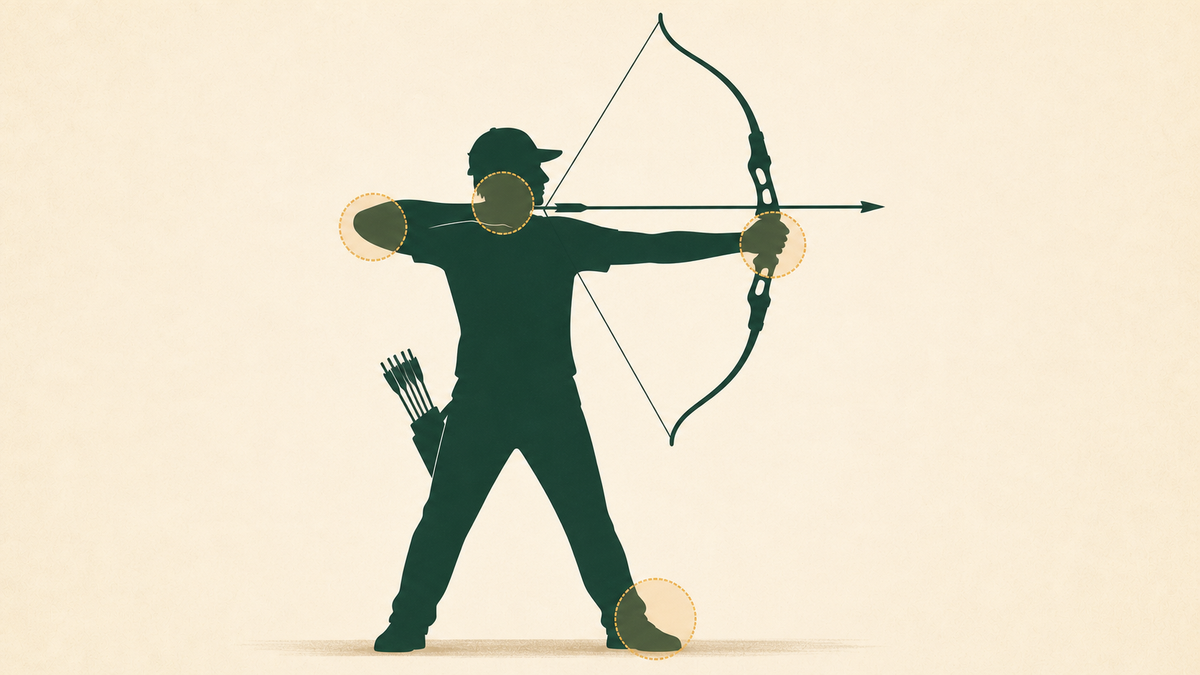
Most beginner archery form mistakes come from gripping the bow too tightly, changing the anchor from shot to shot, using too much draw weight, leaning into the shot, or rushing the release. Fix one problem at a time. Shoot only with a safe target and backstop. If the bow feels too heavy or painful to draw, stop and move to a lighter setup or get in-person help.
Quick answer
Most beginner archery form mistakes come from grip pressure, stance, anchor, draw weight, release timing, and follow-through. A steady setup is easier to fix than a rushed one, so work on one part of the shot at a time. Keep the bow pointed only at a safe target and stop if the setup feels painful or unsafe.
Safety before form work
- Never point the bow at people, animals, roads, houses, or other unsafe areas.
- Use a proper target and backstop before you start shooting.
- Do not dry fire a compound bow.
- Inspect arrows and the bow before each session.
- Stop if anything feels damaged, loose, or wrong.
If you want the dry-fire safety details, read Dry Firing a Compound Bow.
Mistake 1: gripping the bow too tightly
A tight grip twists the bow. That torque can move shots left or right and make the sight picture feel unstable. Keep the bow hand relaxed and let the pressure sit in the thumb-pad area instead of clamping the handle. For hand position details, see How to Hold a Bow.
Mistake 2: inconsistent anchor point
The anchor point must be repeatable. If your face contact or string contact changes from shot to shot, the aim changes too. Keep the same face and string reference every time and keep the rest of the shot simple. A dedicated anchor-point guide can go deeper later; for now, repeat the same contact points on every shot.
Mistake 3: using too much draw weight
Too much draw weight causes shaking, collapsing, sky drawing, poor release, and fatigue. Beginners should control the bow first and chase speed later. If the bow feels heavy, check the setup before forcing more arrows through it. Use How to Measure Bow Draw Weight when you want a safe starting point.
Mistake 4: poor stance and body alignment
Feet and shoulders should be repeatable. Avoid leaning back to force the draw or twisting the upper body to reach anchor. Set the stance first, stay balanced, and keep the body quiet before you aim.
Mistake 5: wrong draw length or uncomfortable fit
Too long or too short a draw length can affect the anchor, the bow arm, and the way the string sits on the face. If the bow feels crowded or stretched, check the fit instead of trying to compensate with the grip. Use How to Measure Draw Length and the Draw Length Calculator to get a starting point.
Mistake 6: rushing the release
Rushing creates flinching and inconsistent shots. Keep the shot smooth and let the release happen without snatching it. If you shoot a compound bow with a release aid, do not punch the trigger just to make the arrow go.
Mistake 7: dropping the bow arm too early
Keep the bow arm steady through the shot. Follow-through helps consistency and shows whether the grip and release stayed quiet. Do not grab the bow at the shot or drop the arm the moment the string leaves the fingers or release aid.
Mistake 8: practicing too far away too soon
Beginners should start close enough to see form and grouping. Distance comes later. Short range makes it easier to spot whether the grip, stance, or anchor needs work. If you want a simple beginner route, start with Start Archery. If you are practicing too far away, compare it with Archery Target Distance Chart.
Beginner form check
| Check | What to look for |
|---|---|
| Grip | Relaxed hand, no squeezing |
| Stance | Feet and shoulders set the same way |
| Anchor | Same point every shot |
| Draw weight | Smooth draw without shaking |
| Draw length | Bow fits without crowding or overreaching |
| Release | Smooth let-go, not a punch |
| Follow-through | Bow arm stays steady after the shot |
| Safety | Safe target and backstop every time |
Run the checks in order and fix one item at a time.
When to get in-person help
Pain while drawing, repeated unsafe misses, a bow that feels too heavy, arrows that keep missing left or right after basic checks, or equipment that looks damaged are all good reasons to stop and get help. A local club, coach, or bow shop can watch your shot and spot the problem faster than more solo arrows can.
Related beginner guides
Use these pages to stay on the beginner path.
Frequently asked questions
Short answers for the most common beginner form questions.
What is the most common archery form mistake?
Gripping the bow too tightly is one of the most common problems because it adds torque and makes the shot less repeatable.
Why do my arrows go left or right?
Grip torque, anchor changes, draw-length fit, and release timing can all move arrows left or right. Check the full setup, not only one part.
Should beginners use a lighter draw weight?
Usually yes, if the current bow feels shaky, painful, or hard to control. A bow you can draw smoothly is easier to learn on.
How do I know if my draw length is wrong?
If the bow feels cramped, overextended, or hard to anchor the same way every time, the draw length may need a check.
Why does my bow arm drop after the shot?
That usually means the follow-through is ending too early or the shot is rushed. Keep the bow arm steady after release.
How close should beginners practice archery?
Close enough to see the group and watch the form. Short distance makes it easier to fix mistakes before they turn into habits.
Can bad grip affect accuracy?
Yes. A tight or changing grip can twist the bow and move the arrows left or right.
References
These references support the beginner grip, stance, and safety guidance on this page.
- USA Archery: Archery Safety
- Archery360: Form Tips for Beginners, Part 1
- Archery360: Archery Techniques for Beginners: Grip