Eye Dominance and Bow Handedness
By James Holbert · Explained Archery
A right-handed bow is held in the left hand and drawn with the right; a left-handed bow is the reverse. Eye dominance can influence aiming, but it does not automatically decide which bow you must buy. Check your sighting preference, then try a light, correctly fitted bow with a coach before choosing a side.
Right-handed versus left-handed: the naming rule
| Bow designation | Hand holding bow | Hand drawing string or release | Usual aiming eye |
|---|---|---|---|
| Right-handed (RH) | Left | Right | Right |
| Left-handed (LH) | Right | Left | Left |
The name follows the drawing hand, not the hand holding the grip. That small distinction prevents an expensive ordering mistake. Writing with your right hand does not mean you should hold a conventional right-handed bow in it.
Check the maker's RH/LH designation rather than guessing from a shop photograph, which may be mirrored. Some club bows are designed for either side; most handed risers are not interchangeable simply by moving an arrow rest. Ask about the riser, rest and sight as a compatible setup.
A simple eye-dominance test without a bow
Eye dominance here means the eye you tend to use for a sighting task. It is not a test of eyesight quality and does not diagnose a vision problem.
- With no bow in your hands, choose a small stationary object several metres away.
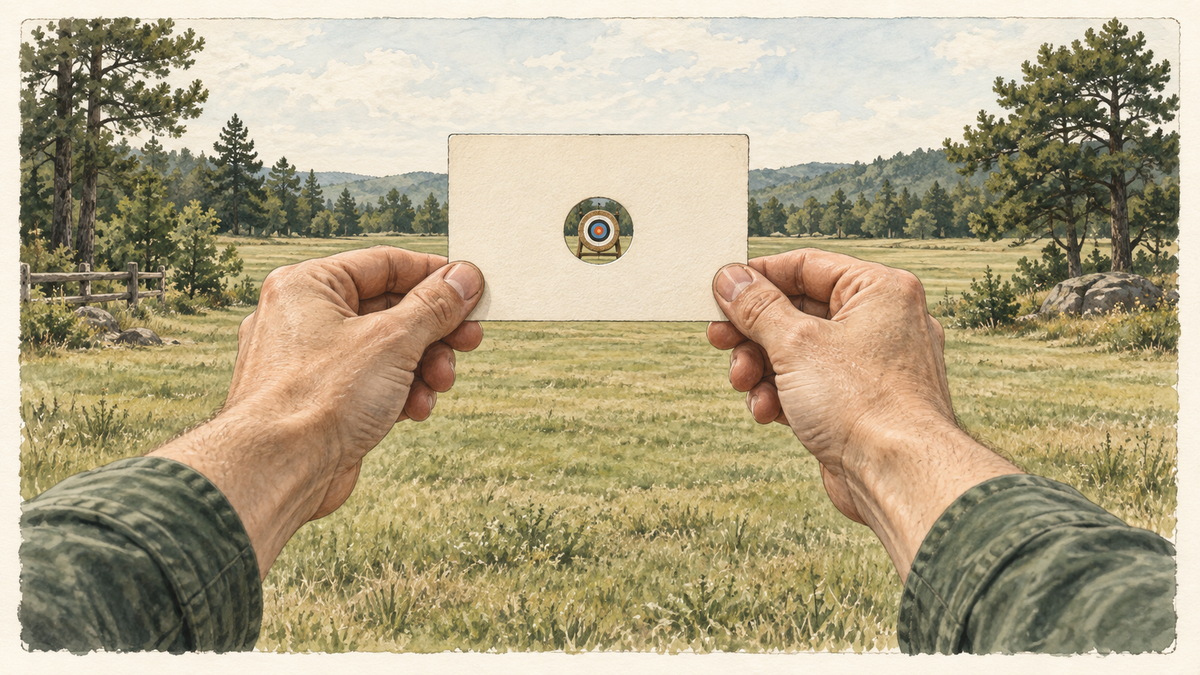
- Hold a card with a small central hole at arm's length. With both eyes open, centre the object through the hole.
- Keep your head and card still. Close the left eye, reopen it, then close the right.
- The eye that keeps the object visible through the opening is your apparent sighting-dominant eye for this test. If closing the left eye preserves the view, that suggests right-eye dominance; the reverse suggests left-eye dominance.
- Lower the card, reset and repeat. Do not shift the card to make a preferred answer work.
The small-aperture approach appears in the 4-H archery teaching materials hosted by Washington State University. An instructor can also check with a small opening formed by your hands. An inconsistent result is a reason to observe your actual aiming—not to label you “wrong-eyed.”
What if your dominant hand and eye differ?
A right-handed person with a left-eye preference, or the reverse, is often called cross-dominant. Treat that as a fitting consideration, not a defect. Two sensible routes are worth discussing:
- Keep the preferred drawing hand. A coach can help you aim with the draw-side eye, initially closing the other eye or using a suitable translucent blinder during aiming.
- Try the other shooting side. A light loaner bow lets you explore whether drawing on the dominant-eye side produces a more comfortable, consistent shot.
Coach Steve Ruis describes both approaches and emphasizes the archer's preference in his discussion of cross-dominance. There is no need to force a new archer through a frustrating hand switch based on one quick test.
Keep both options safe: learn under supervision, do not increase draw weight to make an unfamiliar side feel steadier, and do not reposition your head awkwardly across the string to force the opposite eye into line. A blinder is an aiming aid, not something to wear while navigating the range or retrieving arrows.
A published study of hand–eye preference and archery found that the relationship with accuracy differed between tested beginners and experienced sight users. It does not establish one mandatory choice for every archer. Comfort, coordination and consistent aiming still need to be assessed in person.
Make the decision before buying
Use this short fitting sequence at a club or shop:
- Explain your experience. Tell the coach which hand you write with, any previous shooting experience and whether the aperture test gave a clear result.
- Use manageable loaner equipment. Compare sides only if the bows are similarly easy to handle. A heavy bow on one side makes the comparison unfair.
- Observe the whole shot. Can you follow instructions, reach a comfortable anchor point and see one useful aiming reference without moving your head around?
- Allow practice. The first unfamiliar draw is not a reliable verdict. Do not demand an immediate score improvement or switch sides after every missed arrow.
- Write down the result. Record RH or LH, the aiming eye, draw length and a manageable draw weight. Take that record when shopping.
For a child, continue with the youth bow-fitting checklist. For your own first bow, compare beginner recurve choices only after establishing fit. The recurve size chart addresses bow length; it cannot decide handedness.
Do not mistake every sideways miss for eye dominance
If you already shoot comfortably, a left/right group is not by itself a reason to change bows. Check your sight setting, anchor, grip and clearance using the sideways-arrow checklist. Ask a coach to watch which eye is actually being used before changing technique or buying equipment.
New double vision, persistent visual discomfort or a sudden change in sight is not a tuning problem. Stop shooting and seek appropriate eye-care advice rather than trying to solve it by closing an eye.
Common questions
Which hand holds a right-handed bow?
The left hand holds the bow. The right hand draws the string or operates the release aid.
Must I shoot according to my dominant eye?
No universal rule fits everyone. Eye preference matters for aiming, but coordination, comfort and a coach-observed trial should guide the decision, especially for cross-dominant archers.
Should I shoot with both eyes open?
Both eyes open works for many archers, but closing the non-aiming eye or using a coach-approved blinder can help others. Choose a repeatable sight picture rather than forcing a method that creates confusion.
Can a left-handed child use a right-handed bow?
Possibly, if that shooting side works comfortably and safely in a supervised trial. Do not choose it just because it is the only bow available; test suitable handed equipment and fit first.